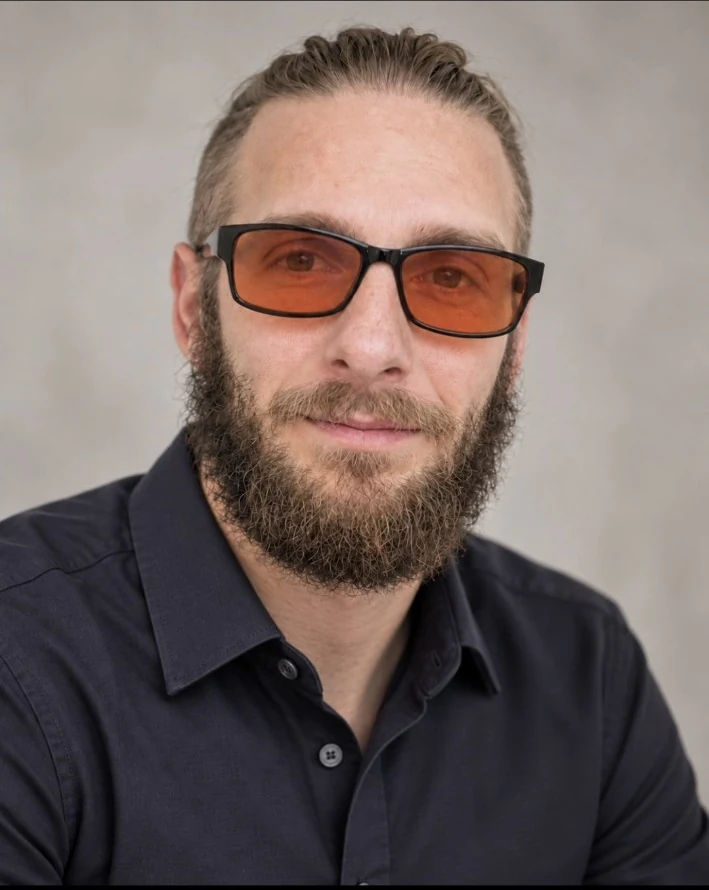
I was born in England and eventually made a life in the United States. Long before I was thinking about publishing or television production, I worked with my hands. Construction and project work teach you something useful: a thing can look good and still fail if nobody thought about how it actually stands up.
That followed me into storytelling.
When I began building Asgard, I found myself asking the same kinds of questions. Where does the road go? What supports the roof? How does water reach the city? Who keeps records? Who repairs damage? Who is working while the people history remembers are making decisions?
I do not think those questions make a story less mythic. I think they make the mythology matter more because there are actual lives underneath it.
Why Norse mythology?
I had been studying Norse mythology for years before Echoes existed. Eventually it became my chosen religion. That gives me a personal relationship with the material, but it does not make my fiction religious authority and it does not turn uncertainty in the surviving record into fact.
The ambiguity is part of what keeps me interested. The more I read, the more I found myself looking at the people inside the stories. Their technology was different. Their world could be brutal. Their beliefs were not ours. Pride still looks like pride. Grief still changes a room. Families still fail to say what they mean. Leaders still confuse information with wisdom. People still have to live with the consequences after the dramatic moment is over.
What I am trying to make
I want the books to work as books. I want the television series to work as television. I want the world in Unreal to behave like a place rather than a backdrop. They can reinforce each other without becoming advertisements for one another.
Maybe there is a god or goddess in all of us. Maybe that is part of why the old stories survived. I’m not here to tell you I have solved that. I’m here to keep looking.
That is probably the simplest explanation of what I am doing here.